I write a newsletter for my church concerning Family History. I also have a blog that I refer members to but it is actually open to the public. In my newsletters, I have a section I call Boot Camp. I try to help people with their family history. So many would like to do family history but have no idea where to begin so these are some very basic lesson and ideas to help everyone with their family history. Remembering that we are actually living our family history now, there are some ideas on what to do now for future generations also. Even though this blog is directed towards the people in my church and my city, it often will have some interesting information for everyone anywhere. So HERE is the blog.
Most of my Boot Camp lessons will be referring to Family Search. It is a wonderful FREE program with World Wide Family Tree. The Family Tree is Live - meaning if you add something to it, your relatives all over the world will be able to see it and use it right then. I know most of us use a variety of Family Trees online but this one is FREE and Live which most are not. One word of note is that it is mostly for the deceased. Any living people information will not be viewable to others. You can put living people into your tree but that will be the only thing others will not be able to see until those living in your tree are deceased. You can add photos, stories, videos, etc. that others will be able to see (for deceased people). There is an awesome FREE search area and lots of FREE help. Check out the blog for other information about Family Search.

Showing posts with label Genealogy. Show all posts
Showing posts with label Genealogy. Show all posts
Thursday, September 24, 2015

Friday, March 16, 2012
1940 US CENSUS - Nation Wide Service Project
In April we will have the opportunity to join a huge nation wide service project. The 1940 census will be available online. The main problem with accessing it is, you have to know exactly where your family lived to find them......SO, there is a massive Nation-Wide Service project getting ready to start Indexing the entire 1940 census. They need the help from EVERYONE!
It is easy and so beneficial. If you are just beginning your family history, it will help you to find your family in just one step. All you will have to do is type in their name on the FamilySearch website and the indexed information will come up. You will then be able to click on the actual document and view it...and all of this for FREE! (Indexed names will be updated on a regular basis so the faster the names are indexed, the faster you will be able to access the information.)
So what do you need to do to help? Just sign up to do Indexing at www.Indexing.familysearch.org and follow the steps to register. You will need to download a program. Once you have downloaded the program, you will need to get registered then you will be ready to begin. It is so easy to sign up. You will need a sign in name with a password (if you belong to the Church of Jesus Christ of Latter-Day Saints, you just use your church sign in name and password).
After you have downloaded the program and signed up, you will be able to download a batch. A batch is generally 1 or 2 pages of the census record. Other types of records are available too as the Church is working on indexing all of the microfilm/microfiche that they have photographed over the many years. Many of the records available are in other languages. You only choose the language you will feel comfortable indexing. If you do read another language, they really need some help from indexers that can read foreign languages.
The batches are not that long, as I said before, just a few names. Most batches take about a half hour to do. You can do as many or as few batches as you'd like. You have about a week to complete one batch. If you do not finish the batch, it will be taken away in a week for someone else to complete. If you find one batch is too difficult and you do not want to do that batch, you can just send it back.
So this is what's happening, you download a batch from the website server and work on it on your computer. You can choose to work offline or stay online and work that way. You have to be online to download a batch and online to submit the batch but if you only have dial-up or if you want to load some batches to do while traveling, you can download them, work on them offline, then go back online to submit them. You can load up to 10 batches at once.
There is awesome help for indexing. For complete help and even live chat assistance, click on the HELP section at the Indexing website. Every batch has it's own set of instructions so be sure to read them before you start. If you cannot read something or something is missing that should be there, refer back to the HELP section for assistance. As I said, if you really cannot find your answer, click on LIVE CHAT (found in the HELP section) and someone will be more than happy to assist (you can also call or send an email for assistance).
Who can index? If you can read, you can index. You do not have to be proficient on the computer. You do not have to be a fast typist. You work at your own speed, in your own home, and on your own computer. If you can give a few minutes a week to this project, you can do it. It is easy to learn. If you only have a few minutes of one week a month, you can do this. If you have time at your lunch break, when the kids are down for a nap, when you are waiting for a call, you can do this. If you feel that you are bored and nothing interests you, try indexing.
A word of warning, you can become addicted. Time flies by so fast and you may have the boss, kids, or spouse tapping the desk for you to get back to their needs but just tell them you are doing a service project. Ask them to join in. The age for signing up is 13+. I knew a lady in her 80's that decided to do something with her days. She learned how to use the computer (just enough to do indexing - nothing more) and began indexing. She ended up working an easy 8 hours a day every day until she died (into her 90's). She even learned how to do the Spanish records and she never spoke or read Spanish before. She just wanted to learn so she did!
Join us in this wonderful World Wide Service Project (general indexing) and our National Service Project (1940 census) and find how truly rewarding it is to offer service this way. Maybe you will even find some of your family while doing it! Check it out today! You do not have to wait for the 1940 census to get started. There is tons to index right now so go take a look. They even have a little "Test Drive" to see what it is all about. If you know someone who needs purpose to their life, have them try this. It is the best therapy you can imagine. I hope you will not just take my word but will actually give it a try. Join us today!
It is easy and so beneficial. If you are just beginning your family history, it will help you to find your family in just one step. All you will have to do is type in their name on the FamilySearch website and the indexed information will come up. You will then be able to click on the actual document and view it...and all of this for FREE! (Indexed names will be updated on a regular basis so the faster the names are indexed, the faster you will be able to access the information.)
So what do you need to do to help? Just sign up to do Indexing at www.Indexing.familysearch.org and follow the steps to register. You will need to download a program. Once you have downloaded the program, you will need to get registered then you will be ready to begin. It is so easy to sign up. You will need a sign in name with a password (if you belong to the Church of Jesus Christ of Latter-Day Saints, you just use your church sign in name and password).
After you have downloaded the program and signed up, you will be able to download a batch. A batch is generally 1 or 2 pages of the census record. Other types of records are available too as the Church is working on indexing all of the microfilm/microfiche that they have photographed over the many years. Many of the records available are in other languages. You only choose the language you will feel comfortable indexing. If you do read another language, they really need some help from indexers that can read foreign languages.
The batches are not that long, as I said before, just a few names. Most batches take about a half hour to do. You can do as many or as few batches as you'd like. You have about a week to complete one batch. If you do not finish the batch, it will be taken away in a week for someone else to complete. If you find one batch is too difficult and you do not want to do that batch, you can just send it back.
So this is what's happening, you download a batch from the website server and work on it on your computer. You can choose to work offline or stay online and work that way. You have to be online to download a batch and online to submit the batch but if you only have dial-up or if you want to load some batches to do while traveling, you can download them, work on them offline, then go back online to submit them. You can load up to 10 batches at once.
There is awesome help for indexing. For complete help and even live chat assistance, click on the HELP section at the Indexing website. Every batch has it's own set of instructions so be sure to read them before you start. If you cannot read something or something is missing that should be there, refer back to the HELP section for assistance. As I said, if you really cannot find your answer, click on LIVE CHAT (found in the HELP section) and someone will be more than happy to assist (you can also call or send an email for assistance).
Who can index? If you can read, you can index. You do not have to be proficient on the computer. You do not have to be a fast typist. You work at your own speed, in your own home, and on your own computer. If you can give a few minutes a week to this project, you can do it. It is easy to learn. If you only have a few minutes of one week a month, you can do this. If you have time at your lunch break, when the kids are down for a nap, when you are waiting for a call, you can do this. If you feel that you are bored and nothing interests you, try indexing.
A word of warning, you can become addicted. Time flies by so fast and you may have the boss, kids, or spouse tapping the desk for you to get back to their needs but just tell them you are doing a service project. Ask them to join in. The age for signing up is 13+. I knew a lady in her 80's that decided to do something with her days. She learned how to use the computer (just enough to do indexing - nothing more) and began indexing. She ended up working an easy 8 hours a day every day until she died (into her 90's). She even learned how to do the Spanish records and she never spoke or read Spanish before. She just wanted to learn so she did!
Join us in this wonderful World Wide Service Project (general indexing) and our National Service Project (1940 census) and find how truly rewarding it is to offer service this way. Maybe you will even find some of your family while doing it! Check it out today! You do not have to wait for the 1940 census to get started. There is tons to index right now so go take a look. They even have a little "Test Drive" to see what it is all about. If you know someone who needs purpose to their life, have them try this. It is the best therapy you can imagine. I hope you will not just take my word but will actually give it a try. Join us today!
Friday, May 20, 2011
Remember!
We are home from our wonderful trip, the sun is shining, and there is much to do. It seems that I have been gone since before Christmas....oh yeah, I have been gone most of that time...YIKES!!!! It is amazing how things build up around a house if you are not there to take care of them. It certainly feels good to be home.
Our trip was so much fun. Looking back at what all we did, the thing I loved doing the most was searching the cemeteries. I loved the sight seeing and the church history tours and am so grateful that we finally got to do those things, but the cemetery experience touched my heart in a way that is difficult to explain.
We are anxious to go cemetery searching again. We realized that we were very unprepared for actually doing a good search and will definitely get ourselves prepared the next time we go (which I hope will be next year). I had taken my computer with my genealogy program and that was a huge help but we needed to plan better. Here is what I would suggest that we we (or anyone wishing to search cemeteries) should do before we go.
1. Get your facts - Try to know as much about your ancestor as you can. It helps to know the cemetery where he/she is buried (or at least the town). Check all of your lines to see if there are others that might be in the same cemetery (try to do as much as you can at one cemetery as possible).
2. Do ground work ahead of time - Write the county or town hall to see if they have any information about the cemetery that would be of help to you - like a plot map showing where graves are located (this will save huge amounts of time walking and searching).
3. Gather supplies - Do research on how to extract information from decaying gravestones (brushes, cleaners, rubbing materials, etc). There are right and wrong ways to clean gravestones - be sure to research this!
4. Plan enough time - It is amazing how fast time flies when you are searching gravestones. If you have to factor in cleaning time, your time will go even faster. Don't rush! Don't over plan your day (don't try to do several cemeteries in a day) - be flexible.
5. Document what you find and where you found it - Take pictures but also map out those around your ancestor - they may be related in some way. It is amazing how quickly you will forget what picture goes where. Take notes of your pictures so when you are looking at them, you will know who it is you are viewing and who they a re related to....(many times you will find a stone that says the family name with no information but in front of the stone you see mother, father, child, etc. This can be very confusing if you are only looking at pictures.).
6. Week day working hours may be best - If you need to talk with someone at the cemetery or in a court house, funeral home, etc., they may only be available during work hours. If you plan your cemetery visit during the weekend, you may be out of luck if you need to speak to someone (believe me, you very well may need to do this).
7. Take the family - What a fantastic experience for your whole family. Get the kids involved. Everyone can search in a cemetery. How exciting it is to see your ancestor's grave. This would be a great time for you to tell your family about some memories or research experience you may have had with this ancestor. These were real people with real life struggles. Believe me, there will be some touching moments when you see your ancestor's grave.
I have seen most of the gravestones on the Internet of the ancestors in the cemeteries we visited but there is such an emotional feeling when you are standing right there where you know other of your ancestors stood many years before. Take the time to visit the dead. Lear about their lives, their stories, the history they have left you. Take the time - it can be life changing!
Our trip was so much fun. Looking back at what all we did, the thing I loved doing the most was searching the cemeteries. I loved the sight seeing and the church history tours and am so grateful that we finally got to do those things, but the cemetery experience touched my heart in a way that is difficult to explain.
We are anxious to go cemetery searching again. We realized that we were very unprepared for actually doing a good search and will definitely get ourselves prepared the next time we go (which I hope will be next year). I had taken my computer with my genealogy program and that was a huge help but we needed to plan better. Here is what I would suggest that we we (or anyone wishing to search cemeteries) should do before we go.
1. Get your facts - Try to know as much about your ancestor as you can. It helps to know the cemetery where he/she is buried (or at least the town). Check all of your lines to see if there are others that might be in the same cemetery (try to do as much as you can at one cemetery as possible).
2. Do ground work ahead of time - Write the county or town hall to see if they have any information about the cemetery that would be of help to you - like a plot map showing where graves are located (this will save huge amounts of time walking and searching).
3. Gather supplies - Do research on how to extract information from decaying gravestones (brushes, cleaners, rubbing materials, etc). There are right and wrong ways to clean gravestones - be sure to research this!
4. Plan enough time - It is amazing how fast time flies when you are searching gravestones. If you have to factor in cleaning time, your time will go even faster. Don't rush! Don't over plan your day (don't try to do several cemeteries in a day) - be flexible.
5. Document what you find and where you found it - Take pictures but also map out those around your ancestor - they may be related in some way. It is amazing how quickly you will forget what picture goes where. Take notes of your pictures so when you are looking at them, you will know who it is you are viewing and who they a re related to....(many times you will find a stone that says the family name with no information but in front of the stone you see mother, father, child, etc. This can be very confusing if you are only looking at pictures.).
6. Week day working hours may be best - If you need to talk with someone at the cemetery or in a court house, funeral home, etc., they may only be available during work hours. If you plan your cemetery visit during the weekend, you may be out of luck if you need to speak to someone (believe me, you very well may need to do this).
7. Take the family - What a fantastic experience for your whole family. Get the kids involved. Everyone can search in a cemetery. How exciting it is to see your ancestor's grave. This would be a great time for you to tell your family about some memories or research experience you may have had with this ancestor. These were real people with real life struggles. Believe me, there will be some touching moments when you see your ancestor's grave.
I have seen most of the gravestones on the Internet of the ancestors in the cemeteries we visited but there is such an emotional feeling when you are standing right there where you know other of your ancestors stood many years before. Take the time to visit the dead. Lear about their lives, their stories, the history they have left you. Take the time - it can be life changing!
Monday, January 17, 2011
A New Year - New Goals
Last year is almost a blur to me. I feel like I accomplished very little due to all of the medical problems we faced in our home. I ended up being mostly a nurse for the first part of the year then got heavily into my business of Vinyl for the last part of the year. I seemed to put aside a lot of my genealogy because there just wasn't any time left.
I have so many projects that I want to do but I am feeling somewhat overwhelmed. I have this genealogy project in mind but have not figured out exactly how I want to go about doing it. I have put it on my "Goals for the NewYear". It seems like ages since I pulled up my genealogy and actually did work on my lines. I taught a bunch of classes in our Family History Center, I started a Genealogy Blog for those needing help, and I have helped my husband get started in Indexing, but I have not done anything for myself - for MY ancestors. So that is my goal. I am going to do this project that I have had in my mind for years now. This is the year to do it.
So if I state the project will that help me to actually start and complete the project? I hope so. Here is my plan. I know many people make books of their ancestors, and that is what I want to do. I don't want just a book, I want a video that goes with it. Many years ago I taped several of my relatives talking about their ancestors. I have these in audio form. For Christmas I bought my mom a digital tape recorder and my daughter interviewed her while visiting for the holiday. My goal is to get my pictures, stories, tapes, and anything else I can find, together in a book and DVD to share with my family. My goal is to get it done this year. I still have all of my other things in my life but I am now going to put this as a top priority.
I would love to gather your ideas and post them here. If you have done something like this and would like to share, please comment on this blog and I will contact you for more details. I would love pictures too!
I have so many projects that I want to do but I am feeling somewhat overwhelmed. I have this genealogy project in mind but have not figured out exactly how I want to go about doing it. I have put it on my "Goals for the NewYear". It seems like ages since I pulled up my genealogy and actually did work on my lines. I taught a bunch of classes in our Family History Center, I started a Genealogy Blog for those needing help, and I have helped my husband get started in Indexing, but I have not done anything for myself - for MY ancestors. So that is my goal. I am going to do this project that I have had in my mind for years now. This is the year to do it.
So if I state the project will that help me to actually start and complete the project? I hope so. Here is my plan. I know many people make books of their ancestors, and that is what I want to do. I don't want just a book, I want a video that goes with it. Many years ago I taped several of my relatives talking about their ancestors. I have these in audio form. For Christmas I bought my mom a digital tape recorder and my daughter interviewed her while visiting for the holiday. My goal is to get my pictures, stories, tapes, and anything else I can find, together in a book and DVD to share with my family. My goal is to get it done this year. I still have all of my other things in my life but I am now going to put this as a top priority.
I would love to gather your ideas and post them here. If you have done something like this and would like to share, please comment on this blog and I will contact you for more details. I would love pictures too!
Sunday, November 7, 2010
Time to Make Those Family Get-Togethers Productive!!!
With Thanksgiving and Christmas fast approaching, it is time for you to think like a Family Historian. Figure out your game plan for collecting and sharing your genealogy.
Some ideas for gifts could be: calendars, family history books, videos of your family, a trip back to your heritage (that one sounds like something I want to do), personal journals or family journals, family history quilt, oh, the list can go on and on.
To prepare for some of these gifts, you will need to get organized. First begin by collecting the pictures and information you will need for the gift you wish to make. Remember, time goes by way too fast and your life may get way too busy for too detailed of a project. If you think your project will take a week to do, you are probably wrong. I always plan to do this huge project and as time flies by, I reorganize and take it down a few notches and end up with a far more simple idea.
Most very detailed projects should have been in the works long before now. You can do some simple projects though. Make a Living Journal for your parents/grandparents/children. Put some pretty paper with lined pages and plastic protectors in a loose leaf binder. Put some cute pictures on the outside cover and have some divider pages for categories like - life story, hobbies, school, etc. Make it specific for the person you are giving it to.
Instead of making a whole quilt with family photos, make a pillow or a picture frame. Personalize it by putting your family photo in the middle. Use ancestor photos all along the outside. Use good materials and be neat and careful with your work.
Make an apron for grandpa or grandma using hand prints of the kids. Use your computer to print on transfer paper to be used on material.
Get the kids to help make a fun video of your family. Have each child do some narration.
Have each member of the family write a special something about their grandparent (maybe something they did with them or something they love about them). Put it in a nice book with some family pictures (you can do this online at many photo sites).
So maybe you are not planning to make a family history gift this year but maybe you are planning a family reunion later in the year and want to have something special for that. Now is the time to begin gathering information from all of the relatives. When you have your family dinners and get togethers, bring a recorder or video camera. Take tons of pictures. Ask your family to bring some memorable items with them to the dinner then bring a portable scanner (I just bought one and it is awesome!). Look through photos (be sure to get the names of those in the photos and places and dates are good too). Take down details - names, date, places. Don't be shy...ASK!
Several years ago my mom had Thanksgiving dinner at her house. She had my grandmother (dad's mom) there. I had taken my video camera to take family pictures. At one point I got my grandmother into the living room and started asking her questions. I quickly got the video camera and started asking her to tell me things about her past - her life. Before we knew it, I had her life story on tape (these were the old days of VHS). I was excited to hear these wonderful stories. One story was about the only Christmas present she got as a child (that was something other than useful stuff like clothes or food). She got a locket. Inside the locket was a picture of her mother and one of her sisters.
Three days after Christmas my grandmother was telling her neighbor all about our Christmas together. She started to say something then closed her eyes and was gone. Just like that...just that fast. She was in great health and we had no idea that she would be leaving us at that time but within one instant she was gone. The will stated that mom was given everything inside my grandmother's home and my uncle would get the home (my dad had already passed on). My mom and I went to grandma's home and collected many of her things (she had nothing of real value except for sentimental value). I got a little box that she had on her dresser all of the time I can remember. Inside the pretty box was a little box holding a locket - the very locket that my grandmother had talked about in the video at Thanksgiving. My video became a real treasure to me and how very close I came to not having anything of her. I not only got the locket but the story in her own words telling about that special day that she got the locket.
As you get ready for the holiday festivities, don't forget to take along your camera (and use it), and any other items you may have to help record stories, pictures, family treasures, etc. Be sure to get the stories that go with the items you collect. Remind your family about their heritage by giving gifts from the past or help them to preserve the present for the future by giving gifts that will continue.
Some ideas for gifts could be: calendars, family history books, videos of your family, a trip back to your heritage (that one sounds like something I want to do), personal journals or family journals, family history quilt, oh, the list can go on and on.
To prepare for some of these gifts, you will need to get organized. First begin by collecting the pictures and information you will need for the gift you wish to make. Remember, time goes by way too fast and your life may get way too busy for too detailed of a project. If you think your project will take a week to do, you are probably wrong. I always plan to do this huge project and as time flies by, I reorganize and take it down a few notches and end up with a far more simple idea.
Most very detailed projects should have been in the works long before now. You can do some simple projects though. Make a Living Journal for your parents/grandparents/children. Put some pretty paper with lined pages and plastic protectors in a loose leaf binder. Put some cute pictures on the outside cover and have some divider pages for categories like - life story, hobbies, school, etc. Make it specific for the person you are giving it to.
Instead of making a whole quilt with family photos, make a pillow or a picture frame. Personalize it by putting your family photo in the middle. Use ancestor photos all along the outside. Use good materials and be neat and careful with your work.
Make an apron for grandpa or grandma using hand prints of the kids. Use your computer to print on transfer paper to be used on material.
Get the kids to help make a fun video of your family. Have each child do some narration.
Have each member of the family write a special something about their grandparent (maybe something they did with them or something they love about them). Put it in a nice book with some family pictures (you can do this online at many photo sites).
So maybe you are not planning to make a family history gift this year but maybe you are planning a family reunion later in the year and want to have something special for that. Now is the time to begin gathering information from all of the relatives. When you have your family dinners and get togethers, bring a recorder or video camera. Take tons of pictures. Ask your family to bring some memorable items with them to the dinner then bring a portable scanner (I just bought one and it is awesome!). Look through photos (be sure to get the names of those in the photos and places and dates are good too). Take down details - names, date, places. Don't be shy...ASK!
Several years ago my mom had Thanksgiving dinner at her house. She had my grandmother (dad's mom) there. I had taken my video camera to take family pictures. At one point I got my grandmother into the living room and started asking her questions. I quickly got the video camera and started asking her to tell me things about her past - her life. Before we knew it, I had her life story on tape (these were the old days of VHS). I was excited to hear these wonderful stories. One story was about the only Christmas present she got as a child (that was something other than useful stuff like clothes or food). She got a locket. Inside the locket was a picture of her mother and one of her sisters.
Three days after Christmas my grandmother was telling her neighbor all about our Christmas together. She started to say something then closed her eyes and was gone. Just like that...just that fast. She was in great health and we had no idea that she would be leaving us at that time but within one instant she was gone. The will stated that mom was given everything inside my grandmother's home and my uncle would get the home (my dad had already passed on). My mom and I went to grandma's home and collected many of her things (she had nothing of real value except for sentimental value). I got a little box that she had on her dresser all of the time I can remember. Inside the pretty box was a little box holding a locket - the very locket that my grandmother had talked about in the video at Thanksgiving. My video became a real treasure to me and how very close I came to not having anything of her. I not only got the locket but the story in her own words telling about that special day that she got the locket.
As you get ready for the holiday festivities, don't forget to take along your camera (and use it), and any other items you may have to help record stories, pictures, family treasures, etc. Be sure to get the stories that go with the items you collect. Remind your family about their heritage by giving gifts from the past or help them to preserve the present for the future by giving gifts that will continue.
Tuesday, August 24, 2010
Genealogy - Storing that Stuff!
I have been doing genealogy since I was a little girl. I am well on my way to Medicare - so I have been doing genealogy for a very long time. When I began, computers were not used to do genealogy but today, that seems to be about the only way to go...maybe even the best way to go. I have containers stuffed full of materials I have gathered over the years - certificates, copies of my pedigree and family group sheets, tons of notes, photo copies of all of my research, and of course, pictures. I have had a great way of organizing my work so that I could easily take what I needed to work on to the Family History Center to do my research but with the changing ways of doing genealogy, I have been confused with how to switch over to this new system of research.
So my old system was to make folders for each surname and a folder for each person with that surname. As I gathered information, I would organize it into the proper folders (even making duplicate copies so that the correct information could be placed into each person's folder that the document applied to), and thus making a complete history of each and every person in my direct lines. I taught this system and it seemed to work for almost everyone (maybe some tweeking here and there to each person's likes). I called this system ABC-123 because the surnames are organized into ABC order and the names within that surname are in 123 order (putting the first name that introduces that surname as 1 - that person's father is 2, grandfather is 3, etc. - it has nothing to do with which generation they are from you!). I stored all of these in a portable file case so that I could take it with me to the Family History Center (FHC) or I could pull just a few folders if I was doing a specific family research.
Then I got a computer. I continued with ABC-123 for a very long time because I could not haul my computer around with me so I still needed the full information when I went to a FHC. But, as computers got better and programs became so much better, I found a new way to do the ABC-123 system. I got a 1 1/2" binder and set it up in the same way as my files. I used this as my "working" folder. So instead of hauling the whole file cabinet, I only had to take my binder. Behind each name I had their family group sheets showing them as a parent. They would be shown as a child under their parent's section. As I researched, I would enter the information I found onto the pages in the family group sheet in different colors. The colors dictated to me what the source was. (ex: 1850 census Martin County IN - all information gleaned would be in red. Death certificate of so and so would be written in green, etc.) When I ran out of different colors and/or when the page looked really messy, I would transfer the information (and documentation) into my genealogy program (at that time I used PAF). I would then print out new pages and replace the old colored pages in my binder. If I photo copied any information, the copy was put into my hard files (so I still used the file system and kept it at home).
 (The picture shows the binder with a family group sheet - the purple page is a list of census records where I found this person/family.)
Now with the computer age upon us, I have lap tops that I take to the FHC, but more important, I only really have to take my flash drive (thumb drive or whatever you know it as) with me. I use the Roots Magic program instead of PAF (I easily transferred ALL of my information from PAF over to RM in about 1 second) and my flash drive actually has my personal genealogy along with the program so I can use this flash drive on any computer - even ones that do NOT have the Roots Magic program on them.
I have taught myself to record all of my research finds directly onto my genealogy program right as I am working on it. (I say taught myself because I have been so bound to the physical paper that it actually was difficult for me to change and use only the computer.) What does this do for me? It reduces tons of paper work, it allows me to quickly look at any person in my program and know everything about that person, it greatly reduces what I now have to take to the FHC. Now, all I take with me are my flash drive, pen and paper (because I still need to take some instant notes but they are not notes that I need to keep). a calculator (because my brain doesn't want to figure out dates), a small portable magnifying glass (my eyes are not the greatest these days), and a snack (because I get really hungry working on genealogy all day). That's it! So easy. And more important, when I go home, I almost always have nothing extra to take home because everything has already been recorded. Note: I also save documents on my flash drive as I go so that I now have a digital record of the actual document so I can look back at it anytime I need to. By the way, almost all of my research is done on the Internet these days so it is easy to copy and save the documents in a digital file. If I do bring home printed copies, I do file them.
So now I still have all of this paper stuff and what do I do with it? I have discovered that I almost never get into my folders that I once treasured. I am getting ready to teach a class at the FHC on this exact subject so I decided that I had better come up with some kind of program that I can use, that others might like, and that works. By the way, my philosophy is - If it works for you, then don't change. We all come up with ways to do things and if it is working for you then by all means, do not change it. It is a huge waste of time to change to another program only to find that you liked your original program better. If you find your system does not work for you, then look for a better way.
This last weekend I made my decision as to how I would save my paper items. I have done away with my ABC-123 file folders - in a way. I have kept the Surname folders (only) and kept the portable file case. I still file the surnames in the ABC format. In this case I put miscellaneous information collected that has no place on my genealogy program (yet). I also keep some misc. packets of information gathered - like I have small books on say the "Smith" family so I file it behind the Smith name. This is a "small" holding place. I am trying to rid myself of unnecessary papers so I am only holding onto things that I feel are of value to my research or treasured for that surname. I do have a box of information that I still need to enter into my genealogy program - after all, it takes a long time to extract information off of papers collected for many years. As I enter that information, I dispose of the papers.
I have elected to keep the binders (I have several binders because I had too much information for just one. I divided my lines into my grandparent's lines so each binder begins with one of my grandparents instead of me or my parents.) but honestly, I do not keep them updated. I have them more for teaching purposes and for some family members that may need to see a printed version of my work. I do store some papers in there that I am not ready to part with such as census records that I view often. Sometimes it is easier to look at a hard copy than see it on the computer screen.
 I have begun a NEW binder. This is my Certificate Binder. I am putting my original copies of certificates, letters, and important keeps, into this binder (in archival plastic slips). I have set it up under Surnames in the ABC order but I also have a section in the back for non direct lines (somehow I have collected several birth, death, obits, etc. from non direct lines - aunts and uncles etc.). I put the documents into ABC order of first names behind the Direct Line Surnames and ABC order of surname in the Non Direct Line section. It may sound confusing, but it is really quite simple. So under my Smith line, I have my grandmother's birth certificate and her death certificate. All certificates that would apply to her will be kept close together except for her marriage or family related certificates. Those I always file behind the husband's name. (I do make copies of delicate original documents to preserve them as a backup.)
This last weekend, I began getting rid of tons of stuff. It felt so good to finally go through all of those records that I was no longer using and reduce the size of my files. I am finding the new certificate binder a nice way to store my original documents and very easy to find what I want when I need it. I love using my flash drive to record ALL of my findings as I do my research and it is so much easier now that I have trained myself to record things as soon as I find them. Be sure to make back ups of your flash drive often or all of that work may be in vain. I save my information in at least 5 different places (on several flash drives, on all of my computers, I send it as a file to an Internet email address, I keep a copy in my safe, and I make hard copies for my binders - I still do have my family binders with printouts of my pedigree and family group sheets with the sources and notes I have recorded on my computer program).
Bottom line - If you have moved into the computer age with your genealogy program but are still in the dark ages with mounds of hard copies and documents, try as I have done and re-think your research documentation and collections by entering it onto your genealogy program and working from your flash drive. It really is nice having it all in one place and not having to lug around a ton of books and such. Try it - you might like it!
So my old system was to make folders for each surname and a folder for each person with that surname. As I gathered information, I would organize it into the proper folders (even making duplicate copies so that the correct information could be placed into each person's folder that the document applied to), and thus making a complete history of each and every person in my direct lines. I taught this system and it seemed to work for almost everyone (maybe some tweeking here and there to each person's likes). I called this system ABC-123 because the surnames are organized into ABC order and the names within that surname are in 123 order (putting the first name that introduces that surname as 1 - that person's father is 2, grandfather is 3, etc. - it has nothing to do with which generation they are from you!). I stored all of these in a portable file case so that I could take it with me to the Family History Center (FHC) or I could pull just a few folders if I was doing a specific family research.
Then I got a computer. I continued with ABC-123 for a very long time because I could not haul my computer around with me so I still needed the full information when I went to a FHC. But, as computers got better and programs became so much better, I found a new way to do the ABC-123 system. I got a 1 1/2" binder and set it up in the same way as my files. I used this as my "working" folder. So instead of hauling the whole file cabinet, I only had to take my binder. Behind each name I had their family group sheets showing them as a parent. They would be shown as a child under their parent's section. As I researched, I would enter the information I found onto the pages in the family group sheet in different colors. The colors dictated to me what the source was. (ex: 1850 census Martin County IN - all information gleaned would be in red. Death certificate of so and so would be written in green, etc.) When I ran out of different colors and/or when the page looked really messy, I would transfer the information (and documentation) into my genealogy program (at that time I used PAF). I would then print out new pages and replace the old colored pages in my binder. If I photo copied any information, the copy was put into my hard files (so I still used the file system and kept it at home).
 (The picture shows the binder with a family group sheet - the purple page is a list of census records where I found this person/family.)
Now with the computer age upon us, I have lap tops that I take to the FHC, but more important, I only really have to take my flash drive (thumb drive or whatever you know it as) with me. I use the Roots Magic program instead of PAF (I easily transferred ALL of my information from PAF over to RM in about 1 second) and my flash drive actually has my personal genealogy along with the program so I can use this flash drive on any computer - even ones that do NOT have the Roots Magic program on them.
I have taught myself to record all of my research finds directly onto my genealogy program right as I am working on it. (I say taught myself because I have been so bound to the physical paper that it actually was difficult for me to change and use only the computer.) What does this do for me? It reduces tons of paper work, it allows me to quickly look at any person in my program and know everything about that person, it greatly reduces what I now have to take to the FHC. Now, all I take with me are my flash drive, pen and paper (because I still need to take some instant notes but they are not notes that I need to keep). a calculator (because my brain doesn't want to figure out dates), a small portable magnifying glass (my eyes are not the greatest these days), and a snack (because I get really hungry working on genealogy all day). That's it! So easy. And more important, when I go home, I almost always have nothing extra to take home because everything has already been recorded. Note: I also save documents on my flash drive as I go so that I now have a digital record of the actual document so I can look back at it anytime I need to. By the way, almost all of my research is done on the Internet these days so it is easy to copy and save the documents in a digital file. If I do bring home printed copies, I do file them.
So now I still have all of this paper stuff and what do I do with it? I have discovered that I almost never get into my folders that I once treasured. I am getting ready to teach a class at the FHC on this exact subject so I decided that I had better come up with some kind of program that I can use, that others might like, and that works. By the way, my philosophy is - If it works for you, then don't change. We all come up with ways to do things and if it is working for you then by all means, do not change it. It is a huge waste of time to change to another program only to find that you liked your original program better. If you find your system does not work for you, then look for a better way.
This last weekend I made my decision as to how I would save my paper items. I have done away with my ABC-123 file folders - in a way. I have kept the Surname folders (only) and kept the portable file case. I still file the surnames in the ABC format. In this case I put miscellaneous information collected that has no place on my genealogy program (yet). I also keep some misc. packets of information gathered - like I have small books on say the "Smith" family so I file it behind the Smith name. This is a "small" holding place. I am trying to rid myself of unnecessary papers so I am only holding onto things that I feel are of value to my research or treasured for that surname. I do have a box of information that I still need to enter into my genealogy program - after all, it takes a long time to extract information off of papers collected for many years. As I enter that information, I dispose of the papers.
I have elected to keep the binders (I have several binders because I had too much information for just one. I divided my lines into my grandparent's lines so each binder begins with one of my grandparents instead of me or my parents.) but honestly, I do not keep them updated. I have them more for teaching purposes and for some family members that may need to see a printed version of my work. I do store some papers in there that I am not ready to part with such as census records that I view often. Sometimes it is easier to look at a hard copy than see it on the computer screen.
 I have begun a NEW binder. This is my Certificate Binder. I am putting my original copies of certificates, letters, and important keeps, into this binder (in archival plastic slips). I have set it up under Surnames in the ABC order but I also have a section in the back for non direct lines (somehow I have collected several birth, death, obits, etc. from non direct lines - aunts and uncles etc.). I put the documents into ABC order of first names behind the Direct Line Surnames and ABC order of surname in the Non Direct Line section. It may sound confusing, but it is really quite simple. So under my Smith line, I have my grandmother's birth certificate and her death certificate. All certificates that would apply to her will be kept close together except for her marriage or family related certificates. Those I always file behind the husband's name. (I do make copies of delicate original documents to preserve them as a backup.)
 The purpose of this book versus filing these bits of information in various places allows me to quickly find original documents. I keep this binder at an easy to access area whereas I store much of the other hard copy information out of sight. Basically, I eliminated the individual files for each person and save the space by just putting this vital information into one easy to access location.
This last weekend, I began getting rid of tons of stuff. It felt so good to finally go through all of those records that I was no longer using and reduce the size of my files. I am finding the new certificate binder a nice way to store my original documents and very easy to find what I want when I need it. I love using my flash drive to record ALL of my findings as I do my research and it is so much easier now that I have trained myself to record things as soon as I find them. Be sure to make back ups of your flash drive often or all of that work may be in vain. I save my information in at least 5 different places (on several flash drives, on all of my computers, I send it as a file to an Internet email address, I keep a copy in my safe, and I make hard copies for my binders - I still do have my family binders with printouts of my pedigree and family group sheets with the sources and notes I have recorded on my computer program).
Bottom line - If you have moved into the computer age with your genealogy program but are still in the dark ages with mounds of hard copies and documents, try as I have done and re-think your research documentation and collections by entering it onto your genealogy program and working from your flash drive. It really is nice having it all in one place and not having to lug around a ton of books and such. Try it - you might like it!
Tuesday, August 3, 2010
It's a "Berry" Good Idea!
Raspberries are ready to pick in North Idaho and as I began picking mine, I was reminded of the many times I picked them with my daughter. As she was growing up, I took many opportunities to discuss life with her. Berry picking had the best analogies to help her realize her importance in this world and the importance of others. As we picked, I would start telling her things like, “beauty is not always easily seen just like some of the best berries are not easy to find". So we would pick and think of one analogy after another. She joined in with her examples and me with mine.
Today while I was picking berries (no daughter around), I began thinking of all of those analogies we used to come up with and thought I would share some of them with you but in the realm of genealogy. Now I am using this for genealogy, but you can apply these things to anything in life. You can compare it with business, people, animals, school, church, being a mother, teacher, missionary, or genealogist. Allow yourself to use your imagination and thinking skills to see what you can come up with.
I have some pictures to help illustrate some of my thoughts so let’s begin.

Sometimes I look at my research and think, “This is just too overwhelming, there’s nothing out there for me, I just can’t do it.” I agree that sometimes it looks that way. When I look at my berry bushes, I sometimes see nothing in site and get discouraged that there are no berries….BUT… if I just go in a little closer, I see new things. If we will just step into research and take one little area to concentrate on, we may find something we thought was not there – we may actually find that there is a lot more in there for us than we could possibly imagine.

Once we get into the berries (our research), we may find some of the fruit is ready and easily picked but others are still not quite ripe enough. The same thing comes when we are researching. Some information is loaded onto the internet or in books or microfilm and more ready to reap the harvest but other information is still not readily available to us.

Sometimes we need to look a little harder. It may well be out there, but hiding in some obscure place. It is important that we turn over every leaf. I've said this before but we sometimes need to think out of the box. Ask ourselves, "What leaf have I not turned over?"


Today while I was picking berries (no daughter around), I began thinking of all of those analogies we used to come up with and thought I would share some of them with you but in the realm of genealogy. Now I am using this for genealogy, but you can apply these things to anything in life. You can compare it with business, people, animals, school, church, being a mother, teacher, missionary, or genealogist. Allow yourself to use your imagination and thinking skills to see what you can come up with.
I have some pictures to help illustrate some of my thoughts so let’s begin.

Sometimes I look at my research and think, “This is just too overwhelming, there’s nothing out there for me, I just can’t do it.” I agree that sometimes it looks that way. When I look at my berry bushes, I sometimes see nothing in site and get discouraged that there are no berries….BUT… if I just go in a little closer, I see new things. If we will just step into research and take one little area to concentrate on, we may find something we thought was not there – we may actually find that there is a lot more in there for us than we could possibly imagine.

Once we get into the berries (our research), we may find some of the fruit is ready and easily picked but others are still not quite ripe enough. The same thing comes when we are researching. Some information is loaded onto the internet or in books or microfilm and more ready to reap the harvest but other information is still not readily available to us.

Sometimes we need to look a little harder. It may well be out there, but hiding in some obscure place. It is important that we turn over every leaf. I've said this before but we sometimes need to think out of the box. Ask ourselves, "What leaf have I not turned over?"
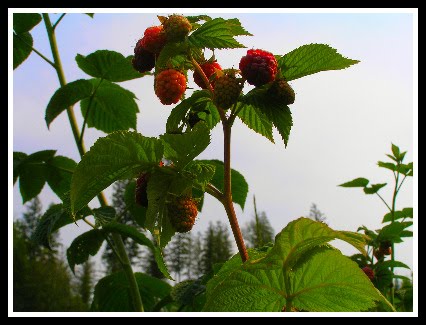
Looking high and low and into every corner may bring about fruit that was very hidden before. I can't tell you how many times I have researched an area only to look at it in a different way and found that missing piece that opened up my lines. Think about being in that berry bush and the times you may have picked an area only to go to the other side of the bush to find a whole new grouping of berries that were just not seen from the original view. Sometimes the weeds of research choke out what we are looking for (the areas that charge for their services) but if we just deal with the problem at hand things may be for our benefit.


Once in awhile, right in the middle of your picking, you find something strange growing. As you get working on it, you find a whole new tree growing out of the bushes. What a find! (Mine is a new plum tree!)

The bottom line is, if you stick to picking, work through the problem areas and deal with the difficulties as they come along, dig deep inside to find those hidden treasures, turn over each leaf, and don't let your first view discourage you, you may just come up with more that you thought was there.

Thursday, June 24, 2010
Genealogical Research - Where Do I Begin
Most people have someone in their family who has collected "the family records". Somehow everyone begins to believe that that particular person is doing all of the family research. Well, I have seen enough and talked to enough people that thought all of their family genealogy was done only to find out that it wasn't and by the time they discovered this, the main "family research" person had passed on.
I watched this video years ago about a prison in Utah. After interviewing inmates, it was discovered that most of them had no idea about their family linage. Many didn't even know their parents. I am not sure if it was the Genealogical Society or exactly who it was, but they went into the prison and began to teach the prisoners how to research their family. It was amazing to hear as they interviewed these hardened criminals, that they believed they had nothing in their family worth while to be proud of. As they began tracing their families, they discovered something. They discovered that they had family - that they belonged. Now to most of us that know our family well, we may not even begin to understand what it is to NOT have family - to NOT feel any belonging in this world - to NOT know that people in a family can love, work together, build bonds, have pride, be courageous, be leaders, be good examples, or live through trials and tribulation.
As these prisoners discovered their families, they realized that they belonged to something bigger than just them. It was amazing to see the softness come out in these men. I don't remember any of the words from the talk but I remember the feeling I had while watching it. It testified to me that every man and woman should not allow someone else to do their family research. There is much more to finding our ancestors than just finding a name here and there and putting it on a pedigree chart or a family group sheet. There are bonds to be built - from the ancestor nearest to you to those who lived hundreds of years ago. It is YOUR family, each and every one of you should get to know them.
So I am asked by those that are beginning (first ones in their family to do family history) to those who think all of their family history has been done and there is nothing left for them to do, but they ask "how do I do this research stuff?" Research takes time but it does not have to be done in a day. It helps to just find a few minutes a day, week, or month to do it. Here is what I do every time I sit down to do research. I have been doing this for years yet each time I sit down to the computer, it is the same as the first day (meaning I do the same process now for each name in my family as I did for the very first name that I researched). The awesome thing is, now you can do most of the research right from the convenience of your home. Honestly, I take my laptop and sit in my recliner chair and while others are watching TV or settling down for the evening, I check out a few names in Ancestry.com. I can work as little as 10 minutes or a whole day if I desire.
Always begin with yourself and go back from there. Now for those of you who say that all of your genealogy is done, I have a wonderful assignment for you. It is called, "gather the facts"! I will get to that in just a minute. Right now I want to talk with those that have never done any kind of genealogy in their life and have no one in the family gathering info for them.
There are dozens of places on the Internet (type in "basic genealogy classes" in Google) where you can go for basic beginning instructions such as Cyndi's List or Family Search. I do suggest that you take some of these simple courses and work through them. They will suggest that you get a box and go through your house gathering information and put it into the box. You will gather things like birth, death, and marriage certificates, funeral notices, and such. Then you will be taught how to put this information into order using Pedigree Charts and Family Group Sheets. I strongly suggest that you invest in a genealogy program. There is a free program to download on Family Search called PAF and other programs such as Roots Magic (the one I use) to Family Tree Maker, and many more. Some are almost no cost and others can get a little pricey. I always go for free or cheap first then when you know what you would like to do with your genealogy, you can decide on a better program (remember pricey does not always mean better). So get started on those easy step by step lessons. Just remember to document your information as you go.
Now back to those of you that think someone else has done all of your work but you are feeling this nagging that you should be doing something. As I said, I love doing genealogy but some of you might not think that you will and are only doing it because you feel obligated. Well, here is what I do even now.
The first thing you need to do is get a good program. Again, I love Roots Magic but any good program will do. Then find out who in your family has your information and get a copy of it for yourself. So let's say you now have a program and you have a copy of your genealogy from Aunt Betty. Using your program, transfer the information into your program. (Email me at fhcsandpoint@gmail.com if you need help with this.) Now you are ready to begin.
So we now have our new beginners entering information into their program for the first time and we have the new researchers who have taken information from a family member and now have it on their program. Now you start at the beginning (The beginning is always with you!). Using programs such as Ancestry.com, FamilySearch.org, and Cyndislist.com, or others, you begin finding out whatever you can to VERIFY that the information you have is correct. From Now back to 1850 the best records are birth, death, and marriage certificates, social security, war, deeds, and a huge help are the census records. I am going to use the example of Ancestry.com but these other programs can help you also.
Using Ancestry, let's begin. By the way, you can sign up for a free week or two of Ancestry just be sure to cancel the day before the week is up or you will be charged automatically. When I first started using Ancestry, I got a two week trial period. My family didn't see me the whole two weeks. I made every minute count. Then I realized I could sign up for a month at a time. So I would check my calendar and find a month that looked like I could dedicate a significant amount of time to researching. I would always cancel before they charged me for the next month. Now I keep it full time. It is my biggest helper when helping others get started. Okay, back to business.
So type your first name into Ancestry and see what comes up. It used to be that the only information you could find was for the deceased and only for those 80 years ago but not anymore. I have found my parents and even myself listed in there. That was a bit shocking but it is what it is. Have you ever typed your name into Google to see if your name would come up? My name came up with three pages of stuff...ugh!
Let's say I am working on my ancestor - Lewis Smith (not my real ancestor!). I would type in his name and his birth date if I knew it. Generally I select to find an exact match as that might eliminate a lot of research time but eventually, I will do a variety of searches for this one person. My goal is to find out everything I can about this person. I want to verify his life and in the process, get to know him. As I find information, I will enter it into my genealogy program under his name. I want everything documented. So what I am doing (for those of you who say all of your work is done and there is nothing left for you to do), I am verifying the information that I already had. You will be surprised at how many errors you will find while doing this. My goal is to have every name with some kind of documentation so that future generations will know that the people in our line are 1. truly our family and 2. their information is correct.
Here is what I do if I find a mistake or a difference from what I originally had. I make note of the original entry (say it was a birth date or even a name) in the "notes" section - then I change it to what my documentation found. So my note might say, "had the name as Levi but found his name on a birth record as Lewis - changed it to Lewis," Then I usually sign my name and the year so I know who made this comment (many years from now you may ask yourself who changed this and why - this note explains it all).
Going on - So I find out everything I can about Lewis Smith. Maybe when I typed his name, nothing came up in Ancestry. I then use my favorite term to myself "think out of the box". I would then begin a variety of ways of researching his name. I might type just his first name - Lewis - along with a birth date or a birth place. I might look for him by finding a sibling or a child and see if his name will come up. I can not even begin to tell you how many times I have typed in a name and searched and searched and found nothing then typed in a child's name and up pops the family with the dad's name exactly like I had spelled it. I do not know why it happens, but it does. So don't give up. Think of any way that you might find that person - think "out of the box".
Also know and understand that most of these genealogy Internet programs like Ancestry and FamilySearch are being updated almost daily with new information. If you do not find something one day, you may another so even though it seems tiring to have to search and then re-search a name, it may be well worth your while. I found an ancestor's grave marker today when I was searching. It was put online a few days ago by a very distant family member that I do not know. I was very excited. I copied the picture to my program so now this ancestor has more history.
If nothing is coming up for this person, go to another person and come back to them another time. Often I will look at my pedigree chart and try to get some inspiration as to who I should work on. Sometimes it comes right to me but other times, like today, I start on one person only to find that I get side tracked and begin finding things on someone else. I often find these "side track" names as I am searching the neighborhood. Remember the goal - to verify each person's information. So if you are the first person to enter this information or correcting information gathered by others, don't give up, keep looking and verify and document.
As you work on each member of your family you will grow to love these people. You will learn that most of them were very normal people with problems just like us. Hopefully you will discover, as the prisoners did, that you do have roots. That your family has meaning and that you have meaning. Please, even if you think Aunt Betty has done everything and there is nothing left for you to do, get going and start verifying what she has and get to know your kin. You may be surprised and find that there is a lot of work to do after all.
I watched this video years ago about a prison in Utah. After interviewing inmates, it was discovered that most of them had no idea about their family linage. Many didn't even know their parents. I am not sure if it was the Genealogical Society or exactly who it was, but they went into the prison and began to teach the prisoners how to research their family. It was amazing to hear as they interviewed these hardened criminals, that they believed they had nothing in their family worth while to be proud of. As they began tracing their families, they discovered something. They discovered that they had family - that they belonged. Now to most of us that know our family well, we may not even begin to understand what it is to NOT have family - to NOT feel any belonging in this world - to NOT know that people in a family can love, work together, build bonds, have pride, be courageous, be leaders, be good examples, or live through trials and tribulation.
As these prisoners discovered their families, they realized that they belonged to something bigger than just them. It was amazing to see the softness come out in these men. I don't remember any of the words from the talk but I remember the feeling I had while watching it. It testified to me that every man and woman should not allow someone else to do their family research. There is much more to finding our ancestors than just finding a name here and there and putting it on a pedigree chart or a family group sheet. There are bonds to be built - from the ancestor nearest to you to those who lived hundreds of years ago. It is YOUR family, each and every one of you should get to know them.
So I am asked by those that are beginning (first ones in their family to do family history) to those who think all of their family history has been done and there is nothing left for them to do, but they ask "how do I do this research stuff?" Research takes time but it does not have to be done in a day. It helps to just find a few minutes a day, week, or month to do it. Here is what I do every time I sit down to do research. I have been doing this for years yet each time I sit down to the computer, it is the same as the first day (meaning I do the same process now for each name in my family as I did for the very first name that I researched). The awesome thing is, now you can do most of the research right from the convenience of your home. Honestly, I take my laptop and sit in my recliner chair and while others are watching TV or settling down for the evening, I check out a few names in Ancestry.com. I can work as little as 10 minutes or a whole day if I desire.
Always begin with yourself and go back from there. Now for those of you who say that all of your genealogy is done, I have a wonderful assignment for you. It is called, "gather the facts"! I will get to that in just a minute. Right now I want to talk with those that have never done any kind of genealogy in their life and have no one in the family gathering info for them.
There are dozens of places on the Internet (type in "basic genealogy classes" in Google) where you can go for basic beginning instructions such as Cyndi's List or Family Search. I do suggest that you take some of these simple courses and work through them. They will suggest that you get a box and go through your house gathering information and put it into the box. You will gather things like birth, death, and marriage certificates, funeral notices, and such. Then you will be taught how to put this information into order using Pedigree Charts and Family Group Sheets. I strongly suggest that you invest in a genealogy program. There is a free program to download on Family Search called PAF and other programs such as Roots Magic (the one I use) to Family Tree Maker, and many more. Some are almost no cost and others can get a little pricey. I always go for free or cheap first then when you know what you would like to do with your genealogy, you can decide on a better program (remember pricey does not always mean better). So get started on those easy step by step lessons. Just remember to document your information as you go.
Now back to those of you that think someone else has done all of your work but you are feeling this nagging that you should be doing something. As I said, I love doing genealogy but some of you might not think that you will and are only doing it because you feel obligated. Well, here is what I do even now.
The first thing you need to do is get a good program. Again, I love Roots Magic but any good program will do. Then find out who in your family has your information and get a copy of it for yourself. So let's say you now have a program and you have a copy of your genealogy from Aunt Betty. Using your program, transfer the information into your program. (Email me at fhcsandpoint@gmail.com if you need help with this.) Now you are ready to begin.
So we now have our new beginners entering information into their program for the first time and we have the new researchers who have taken information from a family member and now have it on their program. Now you start at the beginning (The beginning is always with you!). Using programs such as Ancestry.com, FamilySearch.org, and Cyndislist.com, or others, you begin finding out whatever you can to VERIFY that the information you have is correct. From Now back to 1850 the best records are birth, death, and marriage certificates, social security, war, deeds, and a huge help are the census records. I am going to use the example of Ancestry.com but these other programs can help you also.
Using Ancestry, let's begin. By the way, you can sign up for a free week or two of Ancestry just be sure to cancel the day before the week is up or you will be charged automatically. When I first started using Ancestry, I got a two week trial period. My family didn't see me the whole two weeks. I made every minute count. Then I realized I could sign up for a month at a time. So I would check my calendar and find a month that looked like I could dedicate a significant amount of time to researching. I would always cancel before they charged me for the next month. Now I keep it full time. It is my biggest helper when helping others get started. Okay, back to business.
So type your first name into Ancestry and see what comes up. It used to be that the only information you could find was for the deceased and only for those 80 years ago but not anymore. I have found my parents and even myself listed in there. That was a bit shocking but it is what it is. Have you ever typed your name into Google to see if your name would come up? My name came up with three pages of stuff...ugh!
Let's say I am working on my ancestor - Lewis Smith (not my real ancestor!). I would type in his name and his birth date if I knew it. Generally I select to find an exact match as that might eliminate a lot of research time but eventually, I will do a variety of searches for this one person. My goal is to find out everything I can about this person. I want to verify his life and in the process, get to know him. As I find information, I will enter it into my genealogy program under his name. I want everything documented. So what I am doing (for those of you who say all of your work is done and there is nothing left for you to do), I am verifying the information that I already had. You will be surprised at how many errors you will find while doing this. My goal is to have every name with some kind of documentation so that future generations will know that the people in our line are 1. truly our family and 2. their information is correct.
Here is what I do if I find a mistake or a difference from what I originally had. I make note of the original entry (say it was a birth date or even a name) in the "notes" section - then I change it to what my documentation found. So my note might say, "had the name as Levi but found his name on a birth record as Lewis - changed it to Lewis," Then I usually sign my name and the year so I know who made this comment (many years from now you may ask yourself who changed this and why - this note explains it all).
Going on - So I find out everything I can about Lewis Smith. Maybe when I typed his name, nothing came up in Ancestry. I then use my favorite term to myself "think out of the box". I would then begin a variety of ways of researching his name. I might type just his first name - Lewis - along with a birth date or a birth place. I might look for him by finding a sibling or a child and see if his name will come up. I can not even begin to tell you how many times I have typed in a name and searched and searched and found nothing then typed in a child's name and up pops the family with the dad's name exactly like I had spelled it. I do not know why it happens, but it does. So don't give up. Think of any way that you might find that person - think "out of the box".
Also know and understand that most of these genealogy Internet programs like Ancestry and FamilySearch are being updated almost daily with new information. If you do not find something one day, you may another so even though it seems tiring to have to search and then re-search a name, it may be well worth your while. I found an ancestor's grave marker today when I was searching. It was put online a few days ago by a very distant family member that I do not know. I was very excited. I copied the picture to my program so now this ancestor has more history.
If nothing is coming up for this person, go to another person and come back to them another time. Often I will look at my pedigree chart and try to get some inspiration as to who I should work on. Sometimes it comes right to me but other times, like today, I start on one person only to find that I get side tracked and begin finding things on someone else. I often find these "side track" names as I am searching the neighborhood. Remember the goal - to verify each person's information. So if you are the first person to enter this information or correcting information gathered by others, don't give up, keep looking and verify and document.
As you work on each member of your family you will grow to love these people. You will learn that most of them were very normal people with problems just like us. Hopefully you will discover, as the prisoners did, that you do have roots. That your family has meaning and that you have meaning. Please, even if you think Aunt Betty has done everything and there is nothing left for you to do, get going and start verifying what she has and get to know your kin. You may be surprised and find that there is a lot of work to do after all.
Friday, May 21, 2010
Genealogy - Researching Names - Don't Forget the Obvious
I use a lot of different programs when I am doing genealogical research. I tend to rely on my favorites like Ancestry, Cyndi's List, and Family Search. Recently while doing some research on a family that has baffled me for years, I decided to "Google" the name. I do this every once in awhile but never really got anywhere with this name. Well, yesterday I Googled my ancestor. Wow! I was so excited. I found a pdf file of 87 pages that included some great information about this ancestor and his line. I had forgotten the obvious.
It is amazing to see how much is on the Internet on just about everyone. I was talking to my husband about this and he made the comment that he wouldn't be on the Internet because he does nothing online. So I typed in his name, low and behold, there were two pages of things attached to his name. Needless to say, he was shocked.
So as people and companies are putting more and more information online, don't forget to keep checking the Internet by typing their name into the search field. It helps to add something specific also...like a birth year or location or say something like "Jacob Smith Genealogy". Don't forget to check a few different search engines as some may have information that others do not. Try Google, Bing, Yahoo, Alta Vista, and Dog Pile (compiles Google, Bing, Yahoo, and Ask).
So as you are doing your research, don't forget the obvious. We check search engines for everything else, don't forget to check your family names and see what comes up. Have fun!
It is amazing to see how much is on the Internet on just about everyone. I was talking to my husband about this and he made the comment that he wouldn't be on the Internet because he does nothing online. So I typed in his name, low and behold, there were two pages of things attached to his name. Needless to say, he was shocked.
So as people and companies are putting more and more information online, don't forget to keep checking the Internet by typing their name into the search field. It helps to add something specific also...like a birth year or location or say something like "Jacob Smith Genealogy". Don't forget to check a few different search engines as some may have information that others do not. Try Google, Bing, Yahoo, Alta Vista, and Dog Pile (compiles Google, Bing, Yahoo, and Ask).
So as you are doing your research, don't forget the obvious. We check search engines for everything else, don't forget to check your family names and see what comes up. Have fun!
Wednesday, May 12, 2010
Writing a Family History Book
A couple of years ago for Christmas I decided to make a family history book for my children. It was quite involved and took several months to finish. It included stories and lots of pictures of ancestors clear down to the marriage of our children. It seemed like such a huge project but it was so worth it.
My husband is not someone who likes to write. It was not easy to corral him to get info and stories from his side. We took a couple of long trips to visit family. While he was stuck in the car, I set up my computer on my lap and had him dictate to me something about each of his ancestors. We started our book with our grandparents (the great grandparents of our children). I wanted pictures and stories for each ancestor. I also wanted both my husband and I to write our life history. That meant that my husband was responsible for 4 grandparents, 2 parents, and himself. His grandparents on his paternal side were gone when he was young so he didn't have much to say about them except from what others had told him. He wrote a little more about his maternal grandparents and quite a bit about his parents. I told him that he would probably only write one personal history so he was to say everything he wanted to say about his life. He also included some life experiences and things he wanted to say to his children. We got all of his parent's and grandparent's histories written in the car but time ran out when trying to write his personal history. We did about half in the car then he took a little tape recorder with him to work every day and recorded the remaining history. I transcribed it later.
I also wrote a history on my grandparents, parents, myself, and a history of our life together as husband and wife and parents of our five children. I got 2" binders for each child and one for us. I included a pedigree chart at the beginning. Then I started with the grandparents. Besides their pictures,I included a family group sheet showing them as a child and as a parent. Then came their history. I did my husband's side first, which included his family group sheet as a child and his history with his pictures, then I did my side. This was followed by a family group sheet of our family, our family history, and finally many picture pages of our family from the first child to the fifth. I showed pictures of ouf family up to the marriages of all five children.
It was so rewarding doing this project. It took time but it was quite enjoyable reliving memories of our parents and grandparents and even our lives. How fun it was to revisit pictures of our family. Our children seemed excited to get the books and especially the family pictures. Being someone who loves genealogy, I feel relieved that I finally got these stories in print and the pictures available to each child.
I remember many more stories that I wish I would have included. I have decided to add them to my "personal history". I get many of the topics for my personal history from questions found in "Journal in a Jar". I have a loose leaf binder available to keep these stories and pictures along with other memorabilia that I wish to keep. I am not a good scrapbooker so I do the loose leaf journaling instead.
If you want to give your family a treasure, give them their heritage. Make a Family History Book with pedigree charts, family group sheets, stories, and pictures. Get your family involved in their own personal history. Start them on their way to knowing and loving genealogy by having them start with themselves. Journaling and genealogy can be quite fun. Sometimes you just have to open the door to the past to show the way to the future.
I find it quite pleasurable to sit down and read a good history book.... a real history book - because it is the history of MY FAMILY! My next project - write life stories about other ancestors - further back. I have found the most interesting things about even the most simple of my ancestors. I used to hate history in school but now I find I want to know more about each era. What were the people like? How did they live? How did their surroundings affect their interests and behaviors? I can't wait to get started!
My husband is not someone who likes to write. It was not easy to corral him to get info and stories from his side. We took a couple of long trips to visit family. While he was stuck in the car, I set up my computer on my lap and had him dictate to me something about each of his ancestors. We started our book with our grandparents (the great grandparents of our children). I wanted pictures and stories for each ancestor. I also wanted both my husband and I to write our life history. That meant that my husband was responsible for 4 grandparents, 2 parents, and himself. His grandparents on his paternal side were gone when he was young so he didn't have much to say about them except from what others had told him. He wrote a little more about his maternal grandparents and quite a bit about his parents. I told him that he would probably only write one personal history so he was to say everything he wanted to say about his life. He also included some life experiences and things he wanted to say to his children. We got all of his parent's and grandparent's histories written in the car but time ran out when trying to write his personal history. We did about half in the car then he took a little tape recorder with him to work every day and recorded the remaining history. I transcribed it later.
I also wrote a history on my grandparents, parents, myself, and a history of our life together as husband and wife and parents of our five children. I got 2" binders for each child and one for us. I included a pedigree chart at the beginning. Then I started with the grandparents. Besides their pictures,I included a family group sheet showing them as a child and as a parent. Then came their history. I did my husband's side first, which included his family group sheet as a child and his history with his pictures, then I did my side. This was followed by a family group sheet of our family, our family history, and finally many picture pages of our family from the first child to the fifth. I showed pictures of ouf family up to the marriages of all five children.
It was so rewarding doing this project. It took time but it was quite enjoyable reliving memories of our parents and grandparents and even our lives. How fun it was to revisit pictures of our family. Our children seemed excited to get the books and especially the family pictures. Being someone who loves genealogy, I feel relieved that I finally got these stories in print and the pictures available to each child.
I remember many more stories that I wish I would have included. I have decided to add them to my "personal history". I get many of the topics for my personal history from questions found in "Journal in a Jar". I have a loose leaf binder available to keep these stories and pictures along with other memorabilia that I wish to keep. I am not a good scrapbooker so I do the loose leaf journaling instead.
If you want to give your family a treasure, give them their heritage. Make a Family History Book with pedigree charts, family group sheets, stories, and pictures. Get your family involved in their own personal history. Start them on their way to knowing and loving genealogy by having them start with themselves. Journaling and genealogy can be quite fun. Sometimes you just have to open the door to the past to show the way to the future.
I find it quite pleasurable to sit down and read a good history book.... a real history book - because it is the history of MY FAMILY! My next project - write life stories about other ancestors - further back. I have found the most interesting things about even the most simple of my ancestors. I used to hate history in school but now I find I want to know more about each era. What were the people like? How did they live? How did their surroundings affect their interests and behaviors? I can't wait to get started!
Wednesday, May 5, 2010
Genealogy - Check out the Neighborhood
For years I have been tracing my family lines until I hit what many call "Brick Walls" on every line. I use a program called Roots Magic to record all of the information I have gathered. It allows me to make some great documentation on every bit of information I find for my ancestors. In the past, I have taken each line and searched and searched for the next clue or link in my lines. About a year or so ago I changed my tactics for doing research.
After I entered all of the information into my Roots Magic program, I then began evaluating what I had recorded. I discovered that I had overlooked many clues when I first researched these documents. By carefully recording everything found and applying that documentation to every person involved, I found subtle clues that suddenly became more clear to me.
These brick walls baffled me for far too long. After some much needed prayer and great pondering, I decided to approach my research from a completely different direction than before. One main phrase I began to use with myself was "Think out of the Box". I amazed myself at the difference I began to see.
With the wonderful information available online with websites such as family search, Cyndi's List, and Ancestry, I found it easier to go back to the original source and see what "other" information I may have missed. I began checking all of the neighbors in a particular town in a census (I found my Smith family that way). I made sure that I documented each piece of information I found for each name it applied to. That takes some extra time but it is well worth it in the end. I also entered names of people that I "thought" might belong to the family and put an (Asterisk *) in front of their name to clue me in that this may or may not be a member of this family. This way I could record all information I found about this person and keep it where I would constantly be checking to verify if this was or was not a true relationship. (Please let me know if you would like further instruction on this phase of research and recording).
Here is what happened with my Smith family. In the past, I would look at Smith and run the other way. My Smith's didn't have middle names (at least no record of middle names) and the first names were like Henry and Jacob. So one day I began poking around the neighborhood where my Jacob Smith lived (found in the 1850 census with his wife and a boy named John). I went throughout the neighborhood and wrote down all the Smith's (it wasn't a huge neighborhood thank goodness). I found several male families and an older family (John and Nancy) that could have been my Jacob's parents - but no proof. I went to the 1860 census and found Jacob but John (Junior) was now living with this couple (John and Nancy) that looked like the parents. I documented everything I found and entered all of these male kids as possible brothers to my Jacob.
The thing about the Internet is that new information is constantly being entered. Sometimes the information has been there all along but maybe we didn't look for it in the proper way. Well, I decided to check out a John Smith (Senior) with the age of the man that could have been the parent to my Jacob. What I found was a "will" listing all of these kids I had found in the town (where my Jacob lived) with this John and Nancy as the parents and MY JACOB as one of the children. Not only that, it listed all of the girls in the family by their married names and the names of their husbands. This was the proof that I had needed to tie this family together. All of this was found because I checked out the neighborhood.
Next I began researching the side lines (such as a great great great Aunt's children and grandchildren). I found some grandparents living with their grandchildren (of course under a completely different household surname). I would continue to check out each neighborhood as sometimes cousins would move close to each other. I was amazed at how just taking the time to document every bit of information for every person began to lead me to other clues that I had not either noticed or that only became available to me because of searching these side lines.
I do this documentation and side line searching for every name. I never used to keep information on these side lines, but by recording this information, I discovered that some of that information became the proof I needed to connect my direct lines. It brought home to me that this is really a very small world at times.
An example of this is our Davis line. We had a Jacob S. Davis married to Louisa. Jacob died before 1850. I knew they were the parents to our ancestor Lafayette and he had a sibling Amanda. Through research I discovered Amanda was married to a man named MH Cobb. I searched for Amanda but found nothing. I searched for Louisa and found nothing. Finally I searched for MH Cobb and found him with his wife Amanda living with her mother Louisa and her brother George. All of them were living in the home of Louisa's parents Benjamin and Elizabeth Jenkins and Louisa's brother Edward. What a find! Three generations in one house. They were in a complete different state than I had been searching. I then searched the neighborhood and found more of Louisa's brothers. This information led me to a recording of more information that someone else had prepared. Had it not been for the out of the box search for MH Cobb and the neighborhood search, this information would not have connected this family together.
Now I always check out the neighborhood for each person I am researching. It takes time but it is well worth it in the end. I document all of those possible relatives because you never know when they can take you to a direct line where you had previously had a "Brick Wall". Remember to Think Out of the Box and open your mind to other possibilities such as finding relatives by Checking Out the Neighborhood.
After I entered all of the information into my Roots Magic program, I then began evaluating what I had recorded. I discovered that I had overlooked many clues when I first researched these documents. By carefully recording everything found and applying that documentation to every person involved, I found subtle clues that suddenly became more clear to me.
These brick walls baffled me for far too long. After some much needed prayer and great pondering, I decided to approach my research from a completely different direction than before. One main phrase I began to use with myself was "Think out of the Box". I amazed myself at the difference I began to see.
With the wonderful information available online with websites such as family search, Cyndi's List, and Ancestry, I found it easier to go back to the original source and see what "other" information I may have missed. I began checking all of the neighbors in a particular town in a census (I found my Smith family that way). I made sure that I documented each piece of information I found for each name it applied to. That takes some extra time but it is well worth it in the end. I also entered names of people that I "thought" might belong to the family and put an (Asterisk *) in front of their name to clue me in that this may or may not be a member of this family. This way I could record all information I found about this person and keep it where I would constantly be checking to verify if this was or was not a true relationship. (Please let me know if you would like further instruction on this phase of research and recording).
Here is what happened with my Smith family. In the past, I would look at Smith and run the other way. My Smith's didn't have middle names (at least no record of middle names) and the first names were like Henry and Jacob. So one day I began poking around the neighborhood where my Jacob Smith lived (found in the 1850 census with his wife and a boy named John). I went throughout the neighborhood and wrote down all the Smith's (it wasn't a huge neighborhood thank goodness). I found several male families and an older family (John and Nancy) that could have been my Jacob's parents - but no proof. I went to the 1860 census and found Jacob but John (Junior) was now living with this couple (John and Nancy) that looked like the parents. I documented everything I found and entered all of these male kids as possible brothers to my Jacob.
The thing about the Internet is that new information is constantly being entered. Sometimes the information has been there all along but maybe we didn't look for it in the proper way. Well, I decided to check out a John Smith (Senior) with the age of the man that could have been the parent to my Jacob. What I found was a "will" listing all of these kids I had found in the town (where my Jacob lived) with this John and Nancy as the parents and MY JACOB as one of the children. Not only that, it listed all of the girls in the family by their married names and the names of their husbands. This was the proof that I had needed to tie this family together. All of this was found because I checked out the neighborhood.
Next I began researching the side lines (such as a great great great Aunt's children and grandchildren). I found some grandparents living with their grandchildren (of course under a completely different household surname). I would continue to check out each neighborhood as sometimes cousins would move close to each other. I was amazed at how just taking the time to document every bit of information for every person began to lead me to other clues that I had not either noticed or that only became available to me because of searching these side lines.
I do this documentation and side line searching for every name. I never used to keep information on these side lines, but by recording this information, I discovered that some of that information became the proof I needed to connect my direct lines. It brought home to me that this is really a very small world at times.
An example of this is our Davis line. We had a Jacob S. Davis married to Louisa. Jacob died before 1850. I knew they were the parents to our ancestor Lafayette and he had a sibling Amanda. Through research I discovered Amanda was married to a man named MH Cobb. I searched for Amanda but found nothing. I searched for Louisa and found nothing. Finally I searched for MH Cobb and found him with his wife Amanda living with her mother Louisa and her brother George. All of them were living in the home of Louisa's parents Benjamin and Elizabeth Jenkins and Louisa's brother Edward. What a find! Three generations in one house. They were in a complete different state than I had been searching. I then searched the neighborhood and found more of Louisa's brothers. This information led me to a recording of more information that someone else had prepared. Had it not been for the out of the box search for MH Cobb and the neighborhood search, this information would not have connected this family together.
Now I always check out the neighborhood for each person I am researching. It takes time but it is well worth it in the end. I document all of those possible relatives because you never know when they can take you to a direct line where you had previously had a "Brick Wall". Remember to Think Out of the Box and open your mind to other possibilities such as finding relatives by Checking Out the Neighborhood.
Thursday, April 29, 2010
Family History - Document EVERYTHING you find!
I have taught genealogy for years. I have worked in Family History Centers and have been doing my own research since I was 11. In these years, I have accumulated much information about my ancestors. In the days of paper, I had a fantastic filing system that I also taught. It made finding anything and everything easy - BUT - the age of computers and Internet have changed my whole way of doing things.
I have begun using a program called Roots Magic. There are a huge variety of programs out there and most of them do pretty much the same thing. I personally chose Roots Magic because I liked the way it looks, the way it allows me to enter and document all information, it allows me to make a "to do" list and follow it, and to access church information that I use with ease. It is a great program for newbie's, those only wanting to do church related work, and professional genealogist alike.
One of the greatest features of Roots Magic is that you can download a "To Go" program onto your Flash Drive. You can take the flash drive with you everywhere and can use it on any computer that has a USB port available. The genealogy program does not have to be on the computer you are using. Pop in the flash drive and the menu shows up in a popup window. Select for it to start and you are in your Roots Magic program.
One of my biggest tasks has been to transfer all of the information I have gleened over the years from paper to my computer program. This can be a very time consuming and sometimes boring process but it really needs to be done. What I love about this program though is that I can enter each item as a new listing (such as a birth, marriage, death, census, residence, etc.) and then I can make notes about each item or I can make formal documation.
When you look at most every document, it will have information that applies to more than one person. You need to make sure you enter this information for every person that it may apply to. For instance, let's take a birth certificate. Of course the information is mostly about the actual person born but it will also contain information about the mother, father, and sometimes grandparents. The information should be recorded for each of these people. You may also make a copy of the certificate and attach it to each of these individuals in your genealogy program. Take the time right then to make your notes complete or you may miss vital clues for future information - for instance, write down the dates, places, occupations, and any other tid-bit of information even if you think it insignificant.
As you do your research, whether it be from old records gathered or new infomation found, be sure to document everything for everyone. Think of your record as the only history of this family and it is up to you to preserve it. Even if you think there are many in your family doing research, make your notes understandable and complete. Have it so that anyone at any time will be able to take over from where you left off and not have to redo anything that you have previously done.
Finally, be sure to save your information in more than one place (make backups!). Share your information with others to have copies in more than one place. I will often email my file to one of my online email addresses to keep it in cyberspace and available in case of any kind of disaster.
For more information on how to begin doing genealogy, check out some of the many online classes at Cyndi's List, Family Search, or Ancestry.com. For some detailed information on how to use Roots Magic, check out their website.
I have begun using a program called Roots Magic. There are a huge variety of programs out there and most of them do pretty much the same thing. I personally chose Roots Magic because I liked the way it looks, the way it allows me to enter and document all information, it allows me to make a "to do" list and follow it, and to access church information that I use with ease. It is a great program for newbie's, those only wanting to do church related work, and professional genealogist alike.
One of the greatest features of Roots Magic is that you can download a "To Go" program onto your Flash Drive. You can take the flash drive with you everywhere and can use it on any computer that has a USB port available. The genealogy program does not have to be on the computer you are using. Pop in the flash drive and the menu shows up in a popup window. Select for it to start and you are in your Roots Magic program.
One of my biggest tasks has been to transfer all of the information I have gleened over the years from paper to my computer program. This can be a very time consuming and sometimes boring process but it really needs to be done. What I love about this program though is that I can enter each item as a new listing (such as a birth, marriage, death, census, residence, etc.) and then I can make notes about each item or I can make formal documation.
When you look at most every document, it will have information that applies to more than one person. You need to make sure you enter this information for every person that it may apply to. For instance, let's take a birth certificate. Of course the information is mostly about the actual person born but it will also contain information about the mother, father, and sometimes grandparents. The information should be recorded for each of these people. You may also make a copy of the certificate and attach it to each of these individuals in your genealogy program. Take the time right then to make your notes complete or you may miss vital clues for future information - for instance, write down the dates, places, occupations, and any other tid-bit of information even if you think it insignificant.
As you do your research, whether it be from old records gathered or new infomation found, be sure to document everything for everyone. Think of your record as the only history of this family and it is up to you to preserve it. Even if you think there are many in your family doing research, make your notes understandable and complete. Have it so that anyone at any time will be able to take over from where you left off and not have to redo anything that you have previously done.
Finally, be sure to save your information in more than one place (make backups!). Share your information with others to have copies in more than one place. I will often email my file to one of my online email addresses to keep it in cyberspace and available in case of any kind of disaster.
For more information on how to begin doing genealogy, check out some of the many online classes at Cyndi's List, Family Search, or Ancestry.com. For some detailed information on how to use Roots Magic, check out their website.
Saturday, April 17, 2010
I Love Genealogy
I have been researching my family (genealogy) since I was 11. I am now a grandma and it is still one of my favorite things to do. Unfortunately, I have not yet gotten any of my family out of the USA. I have a few of my husband's lines out but not mine. It is actually quite frustrating but that doesn't stop me.
Some of my favorite sites are: Ancestry.com, Cyndislist.com, and familysearch.org.
One of my families resided in Roanoke, Virginia. I have been so frustrated with my research in that area. I am about ready to hop a flight and check out the area first hand. For some reason, my family lived there for many years yet there seems to be nothing that proves it.
A couple of my husband's lines take us to Ireland. My husband wants to go to Ireland next year and do some research over there. I think he mostly wants to visit Ireland and the genealogy is secondary but that is okay with me. Has anyone ever done a research trip to Ireland? I would love to know more about it.
Diane
Some of my favorite sites are: Ancestry.com, Cyndislist.com, and familysearch.org.
One of my families resided in Roanoke, Virginia. I have been so frustrated with my research in that area. I am about ready to hop a flight and check out the area first hand. For some reason, my family lived there for many years yet there seems to be nothing that proves it.
A couple of my husband's lines take us to Ireland. My husband wants to go to Ireland next year and do some research over there. I think he mostly wants to visit Ireland and the genealogy is secondary but that is okay with me. Has anyone ever done a research trip to Ireland? I would love to know more about it.
Diane
Subscribe to:
Posts (Atom)